
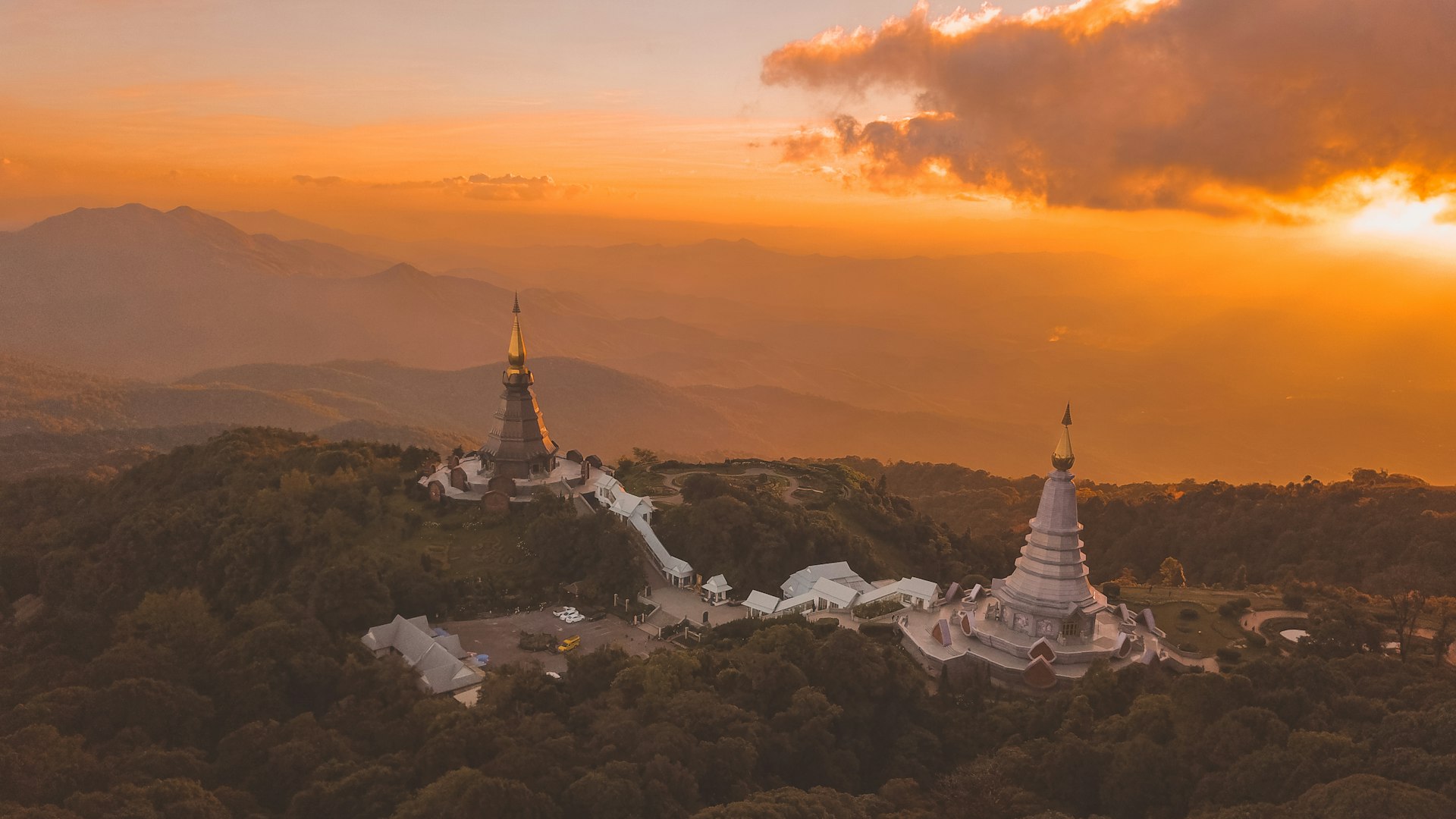
Chiang Mai packs a lot of looks into a small area. Within a short drive you can go from centuries old temples to cloud covered mountains, quiet rice fields and busy city streets. After ten years of filming around northern Thailand, these are the kinds of places we keep coming back to, and a few things we have learned about each one.
1. The old city and its temples
The old city sits inside a square moat, with brick gates and walls still standing at the corners. Inside, there are dozens of temples, from the large ruined chedi at Wat Chedi Luang to small wooden temples tucked down side streets. Wat Umong, a forest temple just outside the city with tunnels built into a hill, gives a calm and shaded look that is hard to find anywhere else.
Temples are places of worship first, so it is always best to ask the temple for permission before you film, and to plan around prayer times and festivals. Dress modestly, keep the crew quiet, and never ask talent to pose on or point their feet toward a Buddha image. Early morning is usually the quietest time, with soft light and fewer visitors.
2. Mountains and misty viewpoints
Doi Suthep rises right behind the city, so you can be shooting mountain roads and forest within a short drive of your hotel. Further out, Doi Inthanon is the highest mountain in Thailand, with cool air, waterfalls, cloud forest and two royal pagodas surrounded by gardens.
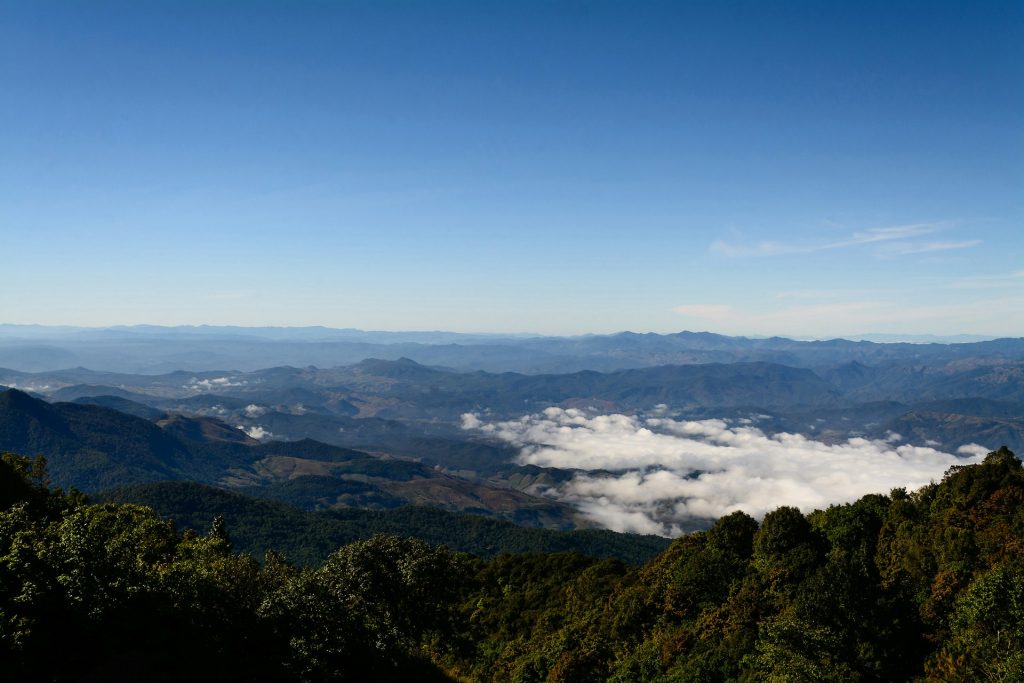
If you want mist, plan for an early start in the cool season. Clouds often sit in the valleys at sunrise and burn off as the day warms up. Mountain weather changes quickly, so it helps to keep a backup location nearby and some flexibility in the schedule.
3. Rice terraces and countryside
The countryside around Chiang Mai is full of rice fields, small villages and teak houses. The terraces at Pa Pong Piang in Mae Chaem are a favourite for wide shots, with layers of green steps running down the hillside. Closer to the city, villages such as Mae Kampong offer wooden homes, coffee farms and mountain streams.
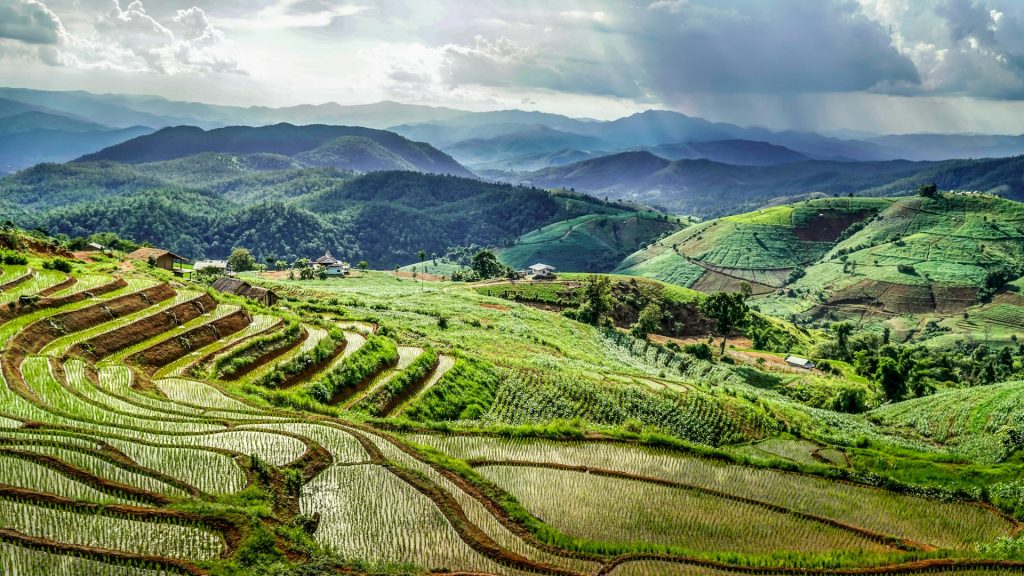
Rice fields change colour through the year. They are bright green during the rainy season and turn golden around harvest time, so the month you shoot decides the look you get. Many of these fields belong to local families, so we always ask the owners before stepping in with a crew.
4. City streets, cafes and modern spaces
Not every story needs a temple or a mountain. The Nimman area is known for cafes, small shops and design studios, and works well for lifestyle, fashion and brand content. Along the Ping River and around the night markets, you will find old shophouses, neon signs and busy street food stalls that come alive after dark.
Public streets get crowded in the evening, so a small, light crew moves much more easily here. For cafes and shops, a short conversation with the owner ahead of time goes a long way.
5. Getting between locations
Most locations in and around the city are easy to reach by van, but mountain roads are narrow and winding, and travel takes longer than the map suggests. We like to group locations by area, so each shoot day stays in one part of the province and the crew spends more time shooting than driving.
Planning your location list
A good location list starts with the story, then the light, then the logistics. If you are still deciding where to shoot, our guide to filming in Chiang Mai covers seasons and working with a local team, and you can see some of the places we have filmed in our projects.
We are always happy to share location ideas or talk through your project. Send us a note at [email protected].
Before We Roll